May 2016

Think train backups are bad now?

Wait until they are down to two tracks downtown;

We’ve all been there — stuck at a railroad crossing waiting for the cars to pass. But imagine waiting at a crossing for a stopped train, for hours.

That’s what neighbors in a development north of I-90 off Kiwanis say is happening to them.

Neighbors say it’s happened several times; a train will be stopped at the railroad crossing for several minutes, and at times for more than an hour.

The latest stopped train was just Thursday night. Traffic was backed up in both directions for about 45 minutes.


In the past few years, Parsons says the BNSF Railway trains are stopping more frequently and for longer periods of time.

We are going to see this all over town once the rail yard closes Downtown. While we blew $27 million of Federal Tax Dollars so we could have 10 measly acres of development, we are really not solving the problem. Two of the Four tracks will remain, so the train traffic will continue, and you are going to see a lot of shuffling around.

Seems the ‘abuse’ of TIF’s is all over the place (H/T – Kolache)

This is a letter to the editor over a year ago in the Lincoln, NE newspaper oddly similar to what we are experiencing in Sioux Falls, especially when it comes to TIF’s and the city’s power to hand them out like candy;

In enacting TIF, the Legislature made a vital mistake not putting state oversight into the process. Over the past 15 years, politicians and real estate speculators hijacked TIF, morphing it into an unauthorized use for self-serving development projects. Municipalities are now unilaterally confiscating the property tax dollars of our public schools, counties, NRDs and community colleges in order to increase developer’s profits and avoid the political pain of raising city property tax rates.

Remember when COSTCO asked NOT to use a TIF? It was for the very reasons mentioned above. COSTCO has a policy of not asking for tax breaks that take away from public education funding.

A Journal Star article dated March 4, concerning the proposed Trinitas Ventures 172-unit living complex, states that the “developer is not asking the city for tax incentives to build the complex, but it has agreed to partner with the city to use (TIF) … to pay for parking improvements.” Neb. Rev. Stat. 18-2116 is clear that projects cannot be approved unless it is demonstrated that they will not occur or be economically feasible in the blighted and substandard redevelopment area without TIF financing.

A story on Aug. 10, 2014, in the Journal Star details another instance where the developer Ploughshare Brewing Company did not ask for TIF; the story states “an unusual situation because the financing wasn’t requested by a private developer. Instead, the city pitched the deal to Ploughshare … over the spring, after work had already begun on its new brewery.” Clearly, these projects do not pass the litmus test of the above statute.

Remember the back and forth on Washington Square’s proposed TIF? While the city and developer claim the TIF will be used mostly for utility and parking, it doesn’t change the fact that luxury condos will be sitting on top of those utility and parking upgrades. Hardly ‘blight’.

The law is clear — those incremental property taxes from “the” project must “be used solely to pay” the bonded indebtedness of the project and “(w)hen such … indebtedness, including interest … ha(s) been paid,” such property thereafter shall be taxed as is other property in the respective taxing districts. There is no justification for “leftover (TIF)  funds” in TIF-related law. Once the projects mentioned in the article (Centennial Mall, Gold’s Building, etc.) generate enough funds to pay off the bond debt, the $5.6 million of property taxes should be returned to the public schools, county and other taxing entities.

Not sure how much different it is in South Dakota, but I will say that some of the same principals apply. Once a TIF runs out, the property owner must start paying what the property is really worth. Ironically, by that time, the ownership of the property will probably not be in the hands of the current developers and investors, who walked away with a pretty penny on their investments, at a cost to our public education system and other government entities (remember, we just passed a 1/2 cent sales tax increase, on things like food, clothing and utilities to pay teachers more, because we are short on education funding-we have a over a half-billion sitting in education investment funds-then we turn around and give property tax breaks to developers who build luxury condos).

I’m opposed to ALL TIF’s, but specifically the current ones we have been handing out, that have NO direct benefit to the public and rob our education funding.

Sanderland in Sioux Falls

press

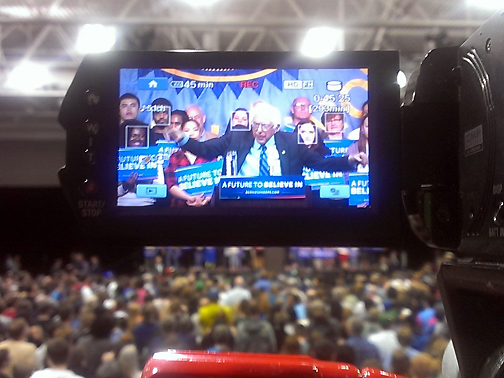
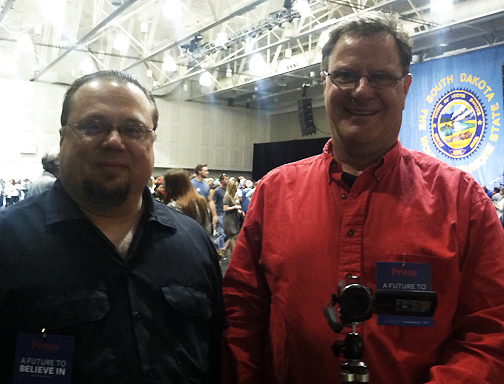
City Hall won’t give Bruce and I PRESS passes, but a presidential campaign will! Our first shot at covering presidential politics (we will have video up soon).

handy-gsanders

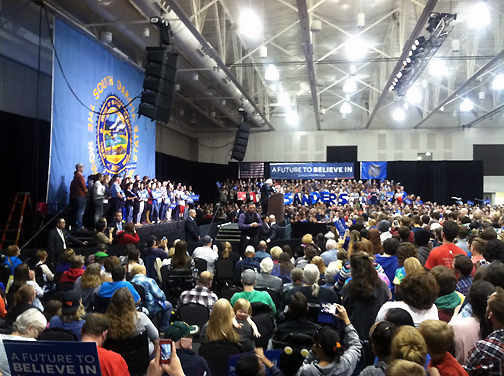
The unofficial count at the event tonight was about 4,300. It certainly surprised me. I guessed that only around 1,000 would show up. But as I joked with another reporter, “Bernie IS a socialist and the event is FREE.”

sandercrowd

Of course as Obama did while campaigning here and many other celebrities have done over the years, Bernie addressed the crowd as ‘Sioux City’. When are these people gonna get it right?

Bernie talked for almost 90 minutes, touching on his key campaign issues. Slamming Wall Street, Walmart, corporate money in politics. He also talked about free college for all, single-payer healthcare, fixing our infrastructure, and bringing the ownership of this country back to the middle and working class.

Bernie’s typical stump speech, and it resonates well with working South Dakotans.

While I already voted for Bernie as and indy in the primary, I am afraid Hillary will be our nominee. Bite our tongues and Dump the Trump.

Sioux Falls City Council Elect Theresa Stehly met with Aberdeen Mayor Mike Levsen

IMG_0243

They met on May 10th to discuss municipal issues. Stehly is interested in learning about how other communities handle 2nd penny expenditures, public input, citywide cleanup day, park board decisions, perspectives on city debt and openness to input from council members on projects included in the budget. She will be visiting with other mayors throughout our state in the months to come to continue to dialogue.