Property Taxes

Property Tax Proposal (Guest Post)

South Dakota values fairness, family, and freedom. However, the current property tax system, is broken and threatens these core principles. While assessing property based on its potential sale price may seem logical in theory, its real-world application disproportionately impacts residents.

Consider the case of “Janet,” an elderly South Dakotan on fixed income. Janet and her late husband built their home 60 years ago, where she raised three children independently after her husband’s unexpected passing. For decades, Janet diligently maintained her home, paid her mortgage, taxes, and lived within her means. However, in her 80s, she was forced to sell her beloved home because her property taxes nearly doubled when she missed the elderly tax freeze deadline, becoming unaffordable. Mary’s situation highlights a systemic failure, not an individual one.

Currently, properties valued under $250,000 have experienced the most significant assessment increases, often doubling their tax burden. In contrast, some multi-million dollar properties have been assessed as low as 60% of their recent sales price. This discrepancy often arises when local assessors claim insufficient data to support recent sales/purchase prices, despite state law clearly stating properties must be assessed at fair market value (FMV). According to Cornell Law School, FMV is the price an informed and unpressured buyer would pay to an informed, unpressured seller in an arm’s length transaction, where the price is based solely on the property’s value and not by a subjective individual (assessor).

While well intended, SB216 missed the mark both on property owner relief and placed significant burdens on vastly growing cities/townships and a reform to the property tax law is still necessary. The best laws are simple laws and I propose basing assessed value on the purchase price of the property established in an arm’s length transaction, rather than an assessor’s determination for residential and agricultural properties. Additionally, I would recommend capping annual increases in assessed value at 2%. Upon the sale of a home, the assessed value would reset to the new purchase price.

This approach offers several benefits:

  • Stability for Property Owners: It provides predictability for families, and retirees allowing them to plan their finances without the risk of sudden, substantial tax increases.
  • Reduced Administrative Burden: By tying assessed value to transaction prices, the need for extensive assessor and/or County Board of Equalization interventions may decrease, potentially leading to budgetary efficiencies.
  • Predictability for Local Governments: With a predictable assessment increase, municipalities can better forecast revenue, enabling more stable budget planning.

Given that South Dakotans reside in their homes for an average of eight years, this proposed system offers a reliable and steady path forward for both homeowners and municipalities. This solution applies to residential and agricultural, emphasizing fairness and stability and could be easily implemented towards commercial properties.

By implementing these changes, we help can prevent our neighbors from being displaced by uncontrollable tax hikes and protect working families striving to build their futures. This straightforward and equitable approach will ensure that South Dakotans can remain in their homes.

*This post was provided by a Sioux Falls Real Estate Company
Stop the Opt Out

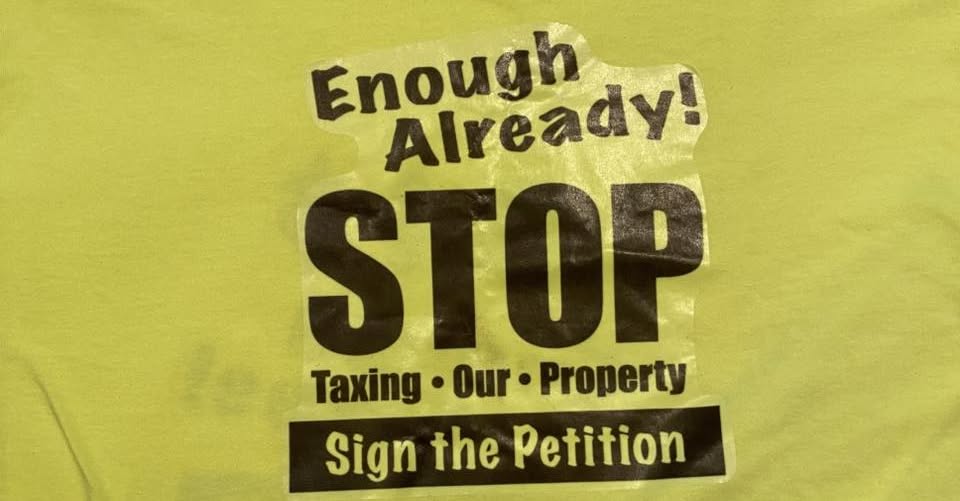
Local group is circulating this petition, I signed it today;

The Sioux Falls School Board just voted to approve ANOTHER opt out – this time to the tune of $2.1M for 10 years. The opt-out will allow the school district to raise additional funds beyond what they get in their existing tax levy and state aid, by collecting taxes from property owners in the district. SD Law allows citizens to bring this to a vote of the people (rather than a board of five unilaterally making the decision for all of Sioux Falls residents.) Deadline is July 17th. We will be circulating petitions to bring the opt-out to a public vote. This group will be for sharing information and locations to sign a petition (if you are a registered voter in the Sioux Falls School District) or if you would like to circulate a petition (have to be a registered voter in the State of South Dakota) you can find out more information for events/opportunities to volunteer at.

You know my feelings on this, stop handing out TIFs like candy and our opt outs would go away.

Instead of Op-outs maybe we need to make TIFS harder to get

Ever since the State Morons in Pierre changed the rules for TIFs (can be for economic development now) They have exploded. I suggest that we limit them to severely damaged lands and low-income housing. The school district just did ANOTHER opt-out, and lied to the public about our taxes increasing. A foot soldier left this comment about the opt-out on Turdbook;

As regular taxpayers are asked to fish into their pockets for $2.1 million of additional money, each year for the next 10 years, be reminded that just for the TIF package given to the developers of The Steel District, the Sioux Falls School District will forego (aka not collect) $1.05 million in real estate tax revenue from those parcels in 2026. For the TIF package given to the developer of Cherapa II, the Sioux Falls School District will forego nearly $1.2 million of real estate tax revenue from those parcels in 2026.

In other words if we started eliminating TIFs and close out the current ones our taxes would actually go down. Did you know that 80% of property taxes paid in the school district and city are from single-family owner occupied homes. So yes, we are paying for these TIFs. And for what? A parking ramp? Public art? Tequila Bar? Seriously! If we eliminated ALL the TIFs we have on the books now the school district would take in MILLIONS in revenue from the big commercial developments. Why are homeowners asked to pay the majority of taxes in Sioux Falls? It should be a 50/50 split between homeowners and commercial property. TIFs never have much of a ROI, studies for decades across the US have shown they don’t stimulate growth and produce very few jobs except when being built. TIFs are a boondoggle and the average Joe is taking it in the shorts. In memoriam of a certain developer who passed recently, the council should make steps to eliminate TIFs from our city, once and for all.

What’s next for the Riverline District?

I can’t imagine the meetings at City Hall today after the SD Legislative Taxation Committee killed the 3rd penny tax in a squeaker, 7-6. It is no secret their ignorant plan was to convince some rubes from rural districts to support this so they can build a street. But most people knew the jig was up. This was about building a Convention Center that nobody wants or cares about. The Ice Ribbon is a great example of a project NO ONE, ABSOLUTELY NO ONE asked for. But now $16 million later here we are.

So some are asking, without this special 3rd penny tax authority can we move forward with the Riverline District? Yes and NO.

While I think the mayor is about as bright as a bar of soap in a truck stop restroom, I think he knew this may not pass, so they may have a backup plan.

I hate to break it to you Poops, but the legislature is dug in on this one, it ain’t going anywhere. Even if passed out of committee it would have been DEAD in the full legislature.

So how can they still salvage the Convention Center deal? It will be financial gymnastics, but they can still do it within their means, but on a smaller scale. My guess is they will push all bond expectations toward the project and see how much they can borrow. They have also been banking reserve funds which I think they want to use for a down payment (It is between $70-80 million) Why does the city have a savings account from our taxes that is 3x what ordinance asks for? With this surplus and borrowing authority the city could build this without a special tax, but the private donations would have to be significant.

My suggestion all along is to implement an INCOME tax on corporations in SF that have more then 500 employees, Hotels and Hospitality to pay for this. They are the benefactors of conventions, visitors and tourism, the average citizen buying a Twin Bing at the GC won’t benefit BUT these industries would. MAKE THEM PAY FOR IT!

To tell you the truth, the more I think about it, I am not opposed to the city buying the land, it has potential, but with this crappy tax revenue source killed, the city will have to get creative. My suggestion? Demo and plant grass, form a committee that will tell us the best use for the land for the least expensive capital improvement. One idea I had years ago is turning Fawick park into a sculpture garden and put all the SculptureWalk sculptures in the park as a destination, essentially an outdoor museum. We could do this here for minimal costs.

It is no secret that Poops would benefit financially thru this deal (still digging on this one, and will crack that case).

Make no mistake, TenHaken’s lack of leadership, transparency and vision put the last nail in this coffin, and I got to admit after I watched the vote live, I howled in enthusiasm. I think I even did a jig. I am a good jigger.

But don’t get lazy, they will try to cut a deal and we must ride their asses until they are dragging on a gravel road. This ain’t over.

The irony of all this is Poop’s record on getting things done. It is awful. And if I was him I would be embarrassed and resign. Bunker Ramp, 6th street bridge, Delbridge dead monkeys, and the constant lying and belittling of public inputers. YOU ARE NOT A LEADER. YOU ARE NOT A VISIONARY.